Independent and Dependent Events: Does One Change the Other?
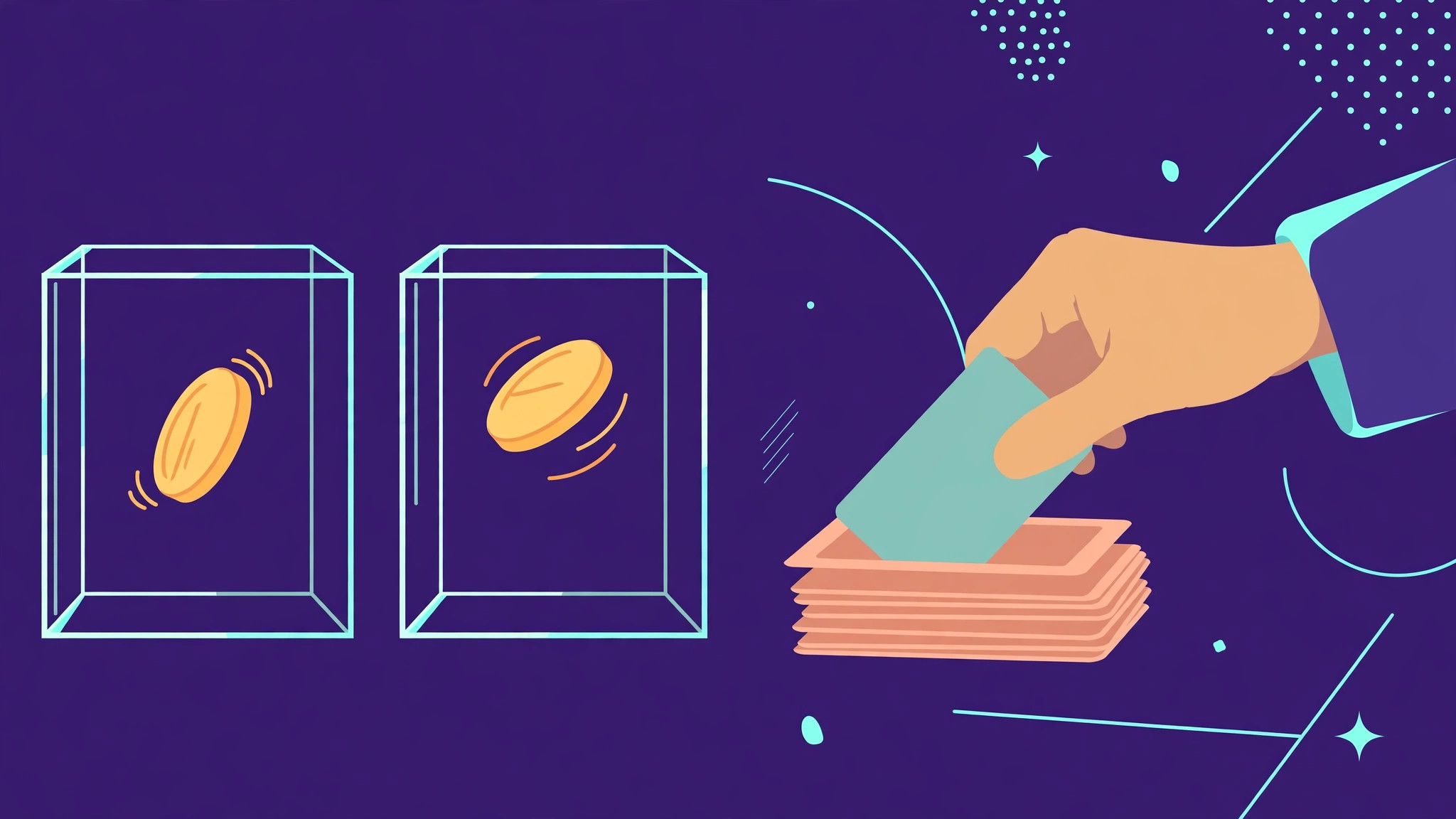
Influence is the test
Two events are independent when learning that one happened tells you nothing about the other: the probability of A given B equals the plain probability of A. Coin tosses are the pure case; the coin keeps no diary. Dependence is any leak of information between events: drawing cards without replacement, where the first card physically removes a possibility from the deck; weather on consecutive days, where today's rain raises tomorrow's chances; two shares in the same industry, moved by the same news. The mathematical test is one line, P(A and B) equals P(A) times P(B) exactly when independent, and the practical test is a question: does the mechanism connect them?
Sampling and the replacement rule
Sampling with replacement preserves independence, because the population resets between draws. Sampling without replacement destroys it, gently when the population is huge, seriously when it is small. Drawing 2 cards from 52 without replacement, the second probability shifts by a single card's worth, small enough that many calculations ignore it; drawing 10 from a batch of 30 parts, the shifts compound and the binomial model, which assumes independence, must yield to the hypergeometric. A working rule: if the sample is under about a tenth of the population, treat draws as near enough independent; beyond that, model the dependence honestly. Casinos shuffle, lotteries replace the balls conceptually, and quality inspectors argue about this line professionally.
Confusions that cost marks and money
Independence is not mutual exclusivity; in fact mutually exclusive events with positive probabilities are maximally dependent, since one occurring forbids the other, the loudest information leak possible. Students swap these constantly, and the swap inverts answers. A second confusion assumes events are independent because they feel unrelated, while a hidden common cause, the same storm, the same market, the same examiner, binds them. A third assumes pairwise independence guarantees the whole set behaves, which fails in crafted examples where every pair is independent yet the triple is not. The safe habit is mechanical: write the conditional probability, compare it with the unconditional one, and let the comparison, not the feeling, deliver the verdict. One more distinction protects real money: independence of events is not the same as uncorrelated measurements, and neither guarantees safety in combination. Portfolios assembled from assets that were independent in calm years discovered common causes in a crisis, when a single panic moved everything together; the dependence was conditional all along, waiting for the condition. Stress testing exists to ask how independence behaves exactly when it matters most. The mathematical definition in this guide is exact, but its inputs are judgements about the world, and the world reserves the right to connect things that looked separate. Hold the definition firmly and the judgement humbly, and the concept will serve rather than ambush you.
Try it with your own numbers
The free calculators that go with this guide:
Test probabilities of combined events