Population vs Sample: The Divide Under All of Statistics
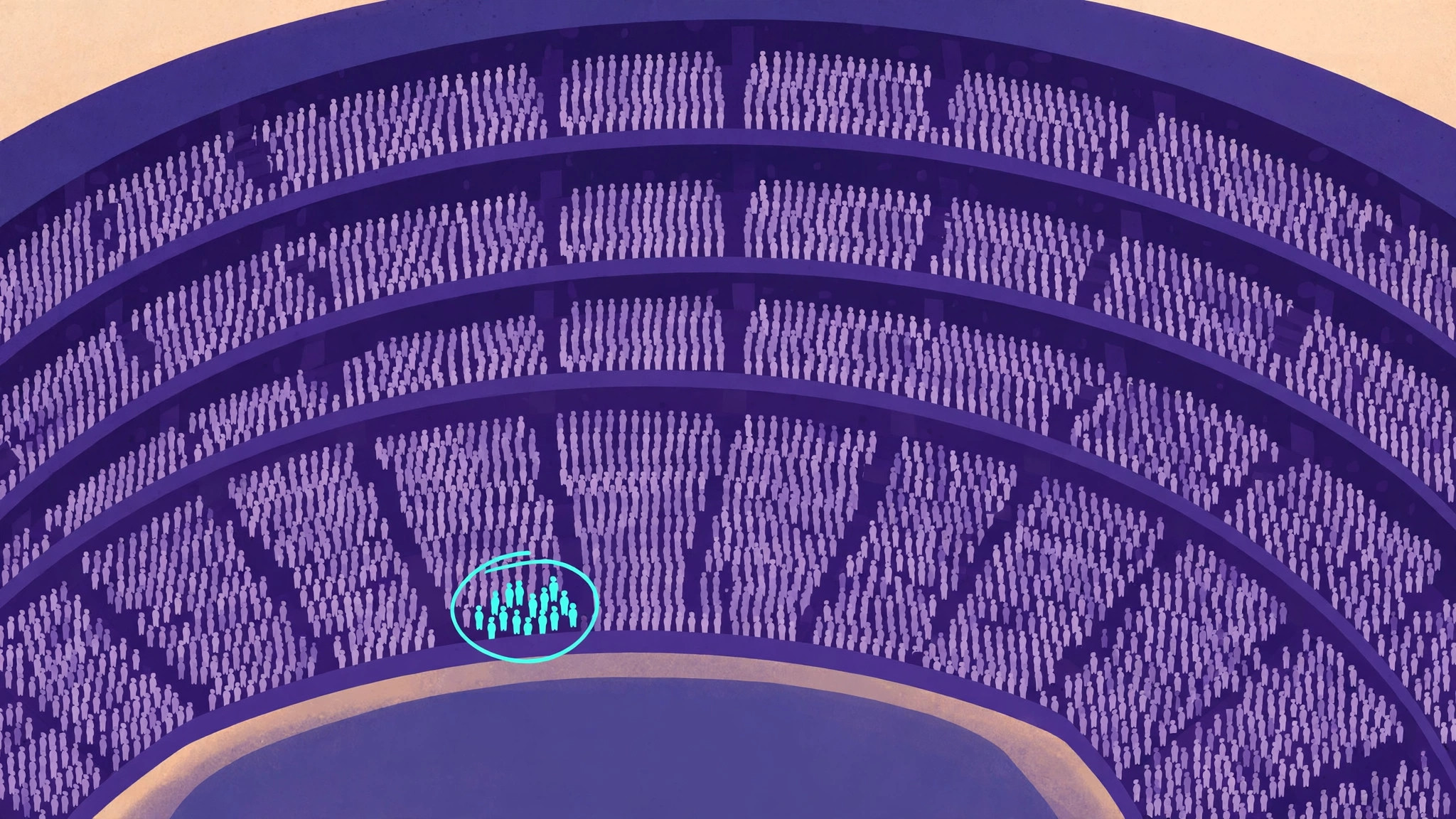
The whole and the part
A population is the entire group a question is about: every voter in a country, every bolt from a production line, every patient with a condition. A sample is the part you actually observe. Numbers describing a population are called parameters, written in Greek: mu for the mean, sigma for the standard deviation. Numbers describing a sample are statistics, written in Latin: x-bar and s. The whole craft of inference is using statistics to estimate parameters while honestly pricing the gap between them. A census tries to erase the gap by measuring everyone, and still stumbles on cost, timing and the people who refuse to be counted.
Why sampling works at all
It feels like a conjuring trick that 1,000 voters can speak for millions, but the mathematics is plain: random selection makes the sample a miniature of the population, with known error behaviour. The sample mean wobbles around the population mean with a standard error that shrinks as the square root of the sample size, regardless of how big the population is. That independence from population size is why national polls and village surveys use similar n. The trick has one non-negotiable condition: the selection must be genuinely random, or at least honestly modelled. A huge sample drawn badly, like an opt-in internet poll, is a precise measurement of the wrong population, which is worse than a small honest one.
Where the divide bites
Confusing sample and population quantities causes real errors. Using the population standard deviation formula, dividing by n, on sample data understates spread; the n minus 1 correction exists precisely for crossing this divide. Reporting a sample result without its margin of error pretends the statistic is the parameter. And populations themselves can be slippery: the population for a medical study is not the patients in the trial but the future patients the results will be applied to, a group that does not yet exist to be sampled. Naming your population precisely, before collecting anything, is the cheapest quality improvement in all of statistics. The census itself deserves a sceptical footnote. Even a complete count carries measurement error: people misunderstand questions, enumerators miss dwellings, and definitions shift between censuses, which is why statistical offices run post-enumeration surveys to estimate the census's own error. A superb sample can therefore beat a sloppy census on accuracy while costing a fraction as much, a result that surprises everyone the first time they meet it. The moral generalises beyond official statistics: in data, as in carpentry, the care of the measurement matters more than the size of the pile, and big is a property of quantity, not of quality.
Try it with your own numbers
The free calculators that go with this guide:
Calculate sample statistics